


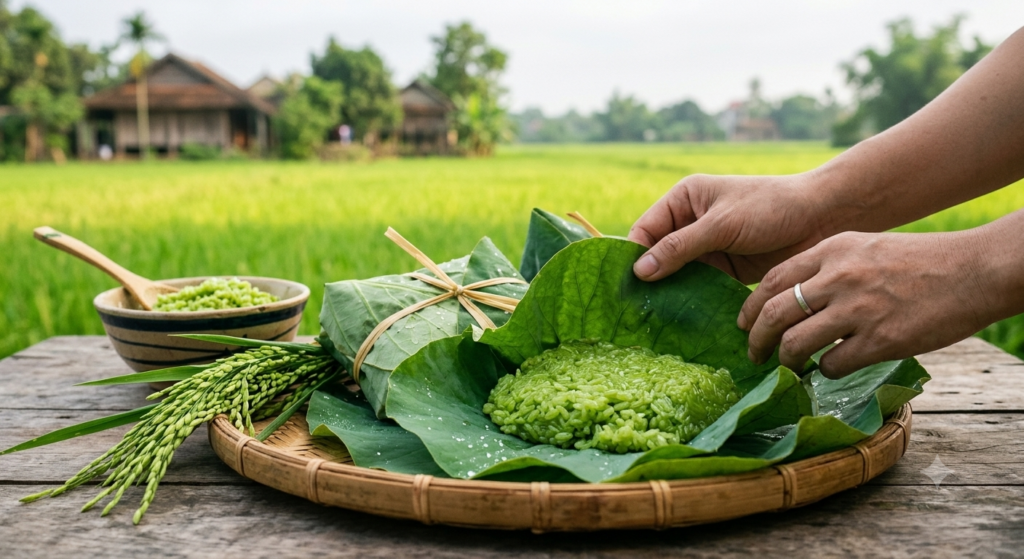
Vietnamese cuisine is gaining increasing attention in international markets thanks to its distinctive flavors, diverse agricultural ingredients, and strong cultural identity. Among traditional Vietnamese foods, Green Rice Products stand out for their unique color, texture, flavor, and connection to Vietnamese culinary heritage.
Known locally as cốm, green rice is traditionally associated with Northern Vietnam, especially Hanoi. From fresh green rice and traditional bánh cốm to modern snacks, mochi, powders, and other processed foods, green rice has the potential to evolve from a seasonal traditional specialty into a broader product category for domestic and international markets.
For food brands, distributors, retailers, and importers, developing Green Rice Products through professional OEM and private label manufacturing can provide an opportunity to combine Vietnamese culinary identity with modern food production.
What Are Green Rice Products?
Green Rice Products are foods made from Vietnamese green rice, commonly known as cốm, or from processed green rice ingredients.
Traditional green rice is made from young rice grains harvested at an appropriate stage of maturity and processed to create its characteristic green appearance, delicate aroma, and chewy texture.
Today, green rice can be developed into different commercial product formats, including:
- Traditional green rice
- Vietnamese green rice cake
- Bánh cốm
- Green rice mochi
- Green rice snacks
- Green rice powder
- Green rice cereal
- Green rice-based confectionery
- Green rice nutrition products
- Green rice ingredients for food manufacturing
This creates opportunities to preserve traditional food culture while developing products that fit modern consumption habits.
Why Is Vietnamese Green Rice Special?
Vietnamese green rice is closely connected with the country’s agricultural traditions and culinary culture.
Its appeal comes from several characteristics.
Distinctive Natural Color
The soft green color immediately creates a visual connection with young rice and Vietnamese agricultural landscapes.
Characteristic Aroma
Fresh green rice has a delicate rice aroma that differentiates it from many conventional cereal and snack products.
Unique Texture
Depending on the product and processing method, green rice can provide a soft, chewy, slightly sticky, or crunchy texture.
Cultural Identity
Cốm is more than an ingredient. It is associated with Vietnamese traditions, especially the culture of Northern Vietnam and Hanoi.
This cultural identity can become an important element of product storytelling for brands targeting international consumers.
From Traditional Cốm to Modern Green Rice Products
Traditionally, cốm is often enjoyed directly or incorporated into Vietnamese dishes and desserts.
However, modern food manufacturing creates opportunities to transform the ingredient into more convenient and scalable products.
The development pathway can be viewed as:
Traditional Cốm → Processed Green Rice → New Product Formats → Branded Products → International Markets
This transformation allows food companies to preserve the identity of Vietnamese green rice while adapting it to modern consumer expectations.
Popular Green Rice Product Opportunities
1. Traditional Vietnamese Green Rice
Fresh or traditionally processed cốm represents the most authentic form of the ingredient.
It can be positioned around:
- Vietnamese culinary heritage
- Northern Vietnamese food culture
- Seasonal specialties
- Traditional food experiences
- Premium Vietnamese gifts
However, fresh products can present challenges related to shelf life, storage, transportation, and distribution.
This creates opportunities for further processing and packaging.
2. Vietnamese Green Rice Cake
Bánh cốm is one of the best-known products associated with Vietnamese green rice.
Traditionally, it combines a green rice outer layer with a sweet filling, commonly mung bean-based.
For modern brands, bánh cốm can be developed into:
- Individual portions
- Premium gift boxes
- Retail products
- Vietnamese specialty food
- Tourist and cultural products
- Export-oriented packaged products
A professional Green Rice Cake Manufacturer can help standardize the product while maintaining its traditional identity.
3. Green Rice Mochi
Mochi provides an interesting bridge between traditional Vietnamese green rice and modern Asian snack culture.
Green rice can be incorporated into mochi through:
- Green rice filling
- Green rice-flavored dough
- Green rice powder
- Green rice-based cream or paste
This format can be particularly interesting for brands looking to create contemporary products inspired by traditional Vietnamese ingredients.
4. Green Rice Snacks
Snack products offer another way to introduce green rice to younger and international consumers.
Possible concepts include:
- Green rice crispy snacks
- Green rice bars
- Green rice cookies
- Green rice crackers
- Green rice-coated snacks
- Green rice confectionery
The advantage is greater convenience compared with traditional fresh products.
5. Green Rice Powder
Processed green rice can also be developed into powder or ingredient formats.
Potential applications include:
- Bakery products
- Desserts
- Beverages
- Cereal products
- Nutrition products
- Confectionery
- Smoothies
- Food-service applications
Ingredient-based formats can also make green rice easier to incorporate into different product categories.
Why Green Rice Products Have Global Potential
The international food market is increasingly diverse. Consumers are exploring products connected to different cultures, ingredients, and culinary traditions.
Vietnamese green rice has several characteristics that can support international product development.
Authentic Vietnamese Origin
The ingredient has a clear connection to Vietnamese food culture.
Visually Distinctive
Its green color can create strong shelf and social-media appeal.
Flexible Ingredient
Green rice can be used in traditional foods as well as modern snacks and desserts.
Storytelling Potential
Brands can communicate stories around:
- Vietnamese rice culture
- Northern Vietnam
- Hanoi
- Traditional food
- Local agriculture
- Vietnamese culinary heritage
For international consumers, this cultural story can make a product more memorable than a generic rice-based snack.
Green Rice Products for Different Consumer Markets
Different formats can target different consumer groups.
Traditional Food Consumers
Suitable products may include:
- Fresh cốm
- Bánh cốm
- Traditional green rice desserts
The focus can be on authenticity and cultural heritage.
Young Consumers
Modern formats may include:
- Mochi
- Green rice snacks
- Cookies
- Cereal products
- Convenient individual portions
The focus can be on taste, convenience, packaging, and visual appeal.
International Consumers
Export-oriented products can emphasize:
- Vietnamese origin
- Authentic ingredients
- Convenient formats
- Clear product information
- Modern packaging
Premium Gift Market
Green rice can also be developed into premium Vietnamese food gifts through:
- Elegant gift boxes
- Limited-edition products
- Cultural storytelling
- Premium packaging
From Fresh Green Rice to Processed Green Rice
One of the key challenges in commercializing traditional green rice is the difference between a fresh traditional ingredient and a modern packaged product.
Fresh green rice may have limitations related to:
- Shelf life
- Moisture
- Storage
- Transportation
- Seasonal availability
- Distribution distance
Processing can help create products that are more suitable for modern retail and international distribution.
Potential approaches include developing:
Fresh Green Rice → Processed Ingredient → Stable Product Format → Packaged Product
The appropriate processing method depends on the desired product, ingredients, target shelf life, packaging, and market requirements.
OEM Green Rice Product Manufacturing
For food brands that do not have their own production facilities, OEM manufacturing can provide a practical way to develop green rice-based products.
An experienced food manufacturer can support the process from product concept to finished product.
Step 1: Product Concept
The brand defines:
- Product category
- Target consumers
- Taste
- Texture
- Product size
- Packaging
- Market positioning
- Target market
Step 2: R&D and Product Development
The R&D team develops or adjusts the product according to the brief.
For green rice products, important considerations may include:
- Green rice characteristics
- Flavor
- Texture
- Moisture
- Filling
- Product stability
- Packaging compatibility
Step 3: Sample Development
Samples are created for the brand to evaluate.
The product can then be adjusted based on:
- Taste
- Appearance
- Texture
- Aroma
- Size
- Filling ratio
- Consumer positioning
Step 4: Quality Control
Appropriate quality and food-safety controls should be applied throughout manufacturing.
Depending on the product, this can include raw-material inspection, process controls, microbiological testing, finished-product testing, and other applicable evaluations.
Step 5: Packaging
The final product can be developed in different packaging formats:
- Individual packs
- Boxes
- Gift boxes
- Pouches
- Retail-ready packaging
- Export packaging
Step 6: Finished Product
Once the product specification and packaging are approved, the manufacturer moves into commercial production and finished-product delivery.
Private Label Green Rice Products
Private label Green Rice Products allow brands to introduce Vietnamese-inspired food products under their own brand identity.
This can be particularly suitable for:
- Food startups
- Vietnamese food brands
- International food companies
- Importers
- Distributors
- Retailers
- E-commerce brands
- Specialty food businesses
- Gift companies
The basic model is:
Your Brand → Product Concept → R&D → Manufacturing → Packaging → Finished Product
The brand can focus on marketing and distribution while the manufacturer handles the production process.
Packaging Green Rice Products for International Markets
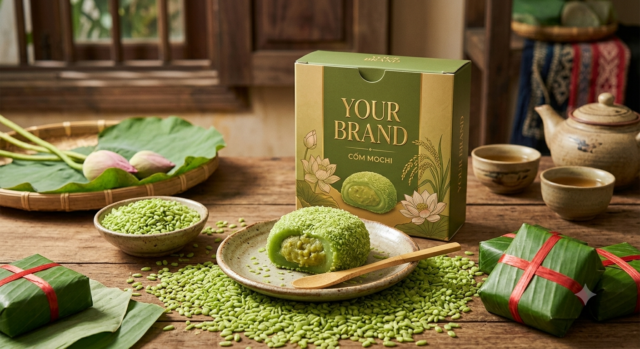
Image generated by AI
Packaging is especially important when introducing traditional Vietnamese foods to international consumers.
The packaging should communicate the product clearly while maintaining its cultural identity.
Traditional Positioning
Use visual elements inspired by:
- Vietnamese rice fields
- Traditional patterns
- Natural materials
- Vietnamese cultural imagery
Modern Positioning
Use:
- Minimalist design
- Contemporary typography
- Clean product photography
- Convenient packaging formats
Premium Positioning
Focus on:
- High-quality packaging materials
- Gift-box formats
- Elegant Vietnamese cultural elements
- Detailed product storytelling
For export products, packaging must also consider applicable labeling, language, ingredient, allergen, nutrition, storage, and other market-specific requirements.
Challenges When Developing Green Rice Products for Export
Traditional food products can have strong cultural appeal, but international commercialization requires careful product development.
Shelf Life
Fresh traditional products may have limited shelf life. Product formulation, processing, packaging, and storage conditions need to be considered together.
Food Safety
Manufacturers need appropriate food-safety controls from raw materials through finished products.
Consistency
Traditional handmade products may vary from batch to batch. Commercial manufacturing requires standardized specifications.
Packaging
Packaging needs to protect the product during storage and transportation while meeting the requirements of the destination market.
Consumer Adaptation
International consumers may not be familiar with cốm. Product communication should explain the ingredient and its cultural background in a simple way.
How to Build a Global Green Rice Brand
Developing a successful Green Rice Products brand requires more than simply exporting a traditional Vietnamese food.
A potential development strategy is:
1. Start With Authenticity
Identify what makes Vietnamese green rice distinctive.
2. Choose the Right Product Format
Decide whether the target market is more suitable for:
- Traditional cake
- Mochi
- Snack
- Powder
- Cereal
- Confectionery
- Other processed foods
3. Develop a Modern Product
Adapt the format, packaging, portion size, and consumer experience to the target market.
4. Build a Strong Brand Story
Communicate the connection between:
Vietnamese rice culture + local ingredients + modern food innovation
5. Develop Export-Ready Packaging
Consider regulatory and logistical requirements from the beginning.
6. Work With an OEM Food Manufacturer
A manufacturing partner can help transform the concept into a standardized commercial product.
Why Choose IMC for Green Rice Product Manufacturing?
IMC develops OEM/ODM food products and supports brands looking to transform Vietnamese ingredients into modern commercial products.
For Green Rice Products, IMC can support projects involving:
- Green rice product development
- Bánh cốm
- Green rice cake
- Green rice mochi
- Green rice snacks
- Green rice-based food concepts
- Product R&D
- Sample development
- Ingredient selection
- Manufacturing
- Quality control
- Packaging
- Private label production
- OEM/ODM development
IMC’s approach focuses on combining Vietnamese food identity with modern product development and manufacturing.
This allows brands to explore new formats while maintaining the distinctive character of Vietnamese green rice.
From Vietnamese Green Rice to Global Food Products
Vietnamese green rice has the potential to become more than a traditional seasonal specialty.
By combining traditional ingredients with modern R&D, processing, packaging, and brand development, Green Rice Products can be adapted into a wider range of commercial formats.
From bánh cốm and traditional green rice to mochi, snacks, powders, cereals, and other innovative products, there are multiple opportunities to bring Vietnamese green rice to new consumer groups.
The key is to maintain the authenticity of the ingredient while developing products that meet modern expectations for quality, convenience, consistency, packaging, and market suitability.
For brands looking to develop Vietnamese food products for domestic or international markets, partnering with an experienced OEM manufacturer can provide a practical path from concept to finished product.
Develop Your Green Rice Product With IMC
IMC supports brands, distributors, retailers, and international partners looking to develop Vietnamese Green Rice Products through OEM and private label manufacturing.
From product concept and R&D to manufacturing and packaging, IMC can help turn Vietnamese culinary ingredients into market-ready products.
Contact IMC:
- Website: www.imc.net.vn
- Email: info@imc.net.vn
- Hotline / WhatsApp: +84 911 818 018