


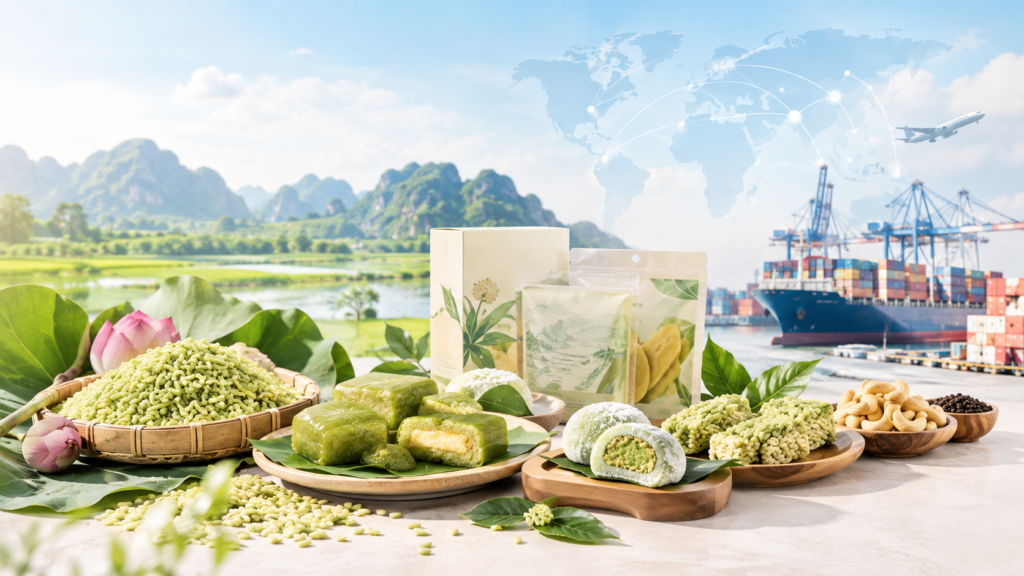
Vietnamese cuisine is known for its distinctive flavors, diverse ingredients, and rich cultural heritage. From rice-based specialties and traditional cakes to tropical fruit products and modern snacks, Vietnam offers a wide range of food products with potential in international markets.
For international importers, distributors, retailers, and food brands, Vietnamese Food Export presents opportunities to introduce authentic local flavors to consumers worldwide while creating new value from Vietnam’s agricultural resources and culinary traditions.
However, not every traditional food is immediately suitable for export. Product selection, processing methods, shelf life, packaging, food safety requirements, and destination-market regulations all influence whether a product can be successfully commercialized internationally.
This article explores traditional Vietnamese foods with export potential and the factors businesses should consider when sourcing or developing these products.
1. Vietnamese Green Rice Products (Cốm)
Green rice, known as cốm in Vietnamese, is a traditional specialty particularly associated with Hanoi and northern Vietnam. Made from young rice grains, it is recognized for its delicate flavor, distinctive green color, and cultural significance.
Beyond fresh green rice, the category offers opportunities for product development and commercialization.
Potential export product formats include:
- Traditional Bánh Cốm, a green rice cake commonly featuring a sweet filling.
- Green rice snacks for specialty food and retail channels.
- Mochi-inspired products incorporating Vietnamese green rice.
- Packaged green rice products developed for gifting or contemporary consumption occasions.
For international markets, product format and shelf life require careful consideration. Fresh products may need more demanding storage and transportation arrangements, while processed formats may offer different distribution opportunities when supported by suitable processing, packaging, and shelf-life validation.
For brands seeking a distinctive Vietnamese product story, green rice can connect traditional culinary identity with modern product development.
2. Vietnamese Rice Cakes and Traditional Rice-Based Snacks
Rice is a central ingredient in Vietnamese cuisine, supporting a broad range of traditional cakes and snacks. These products reflect regional culinary traditions and offer opportunities for businesses interested in Asian specialty foods.
Depending on the product, examples include bánh cốm, bánh đậu xanh, bánh in, and other rice-based or grain-based specialties.
Why this category may appeal to importers:
- Familiar ingredients with distinctive Vietnamese preparation methods.
- Opportunities for premium gifting and specialty retail.
- Different portion sizes and packaging concepts.
- Potential for product adaptation to specific retail and food service channels.
Not all traditional cakes share the same processing requirements or shelf life. Importers should assess each product individually, particularly when fillings, moisture levels, or perishable ingredients are involved.
Manufacturers and buyers can also explore modern packaging and portion formats while preserving the product’s traditional identity.
3. Vietnamese Dried Fruits and Tropical Fruit Products
Vietnam’s tropical climate supports the cultivation of fruits such as mango, dragon fruit, jackfruit, banana, pineapple, and coconut.
These ingredients can be developed into a variety of food products, including dried fruit, fruit snacks, fruit-based ingredients, and other processed formats.
Potential product opportunities include:
- Dried mango and banana.
- Dried jackfruit.
- Coconut-based snacks and ingredients.
- Processed tropical fruit products for retail or food manufacturing.
Compared with fresh fruit, certain dried or processed products may be easier to distribute over longer distances. However, export suitability depends on the specific processing method, moisture control, packaging, product stability, and destination-market requirements.
Importers should also verify ingredient declarations, additives, allergen information where relevant, and any applicable residue or contaminant limits.
4. Vietnamese Nuts, Seeds, and Agricultural Ingredients
Vietnam is associated with several agricultural products used in domestic and international food supply chains, including cashews, pepper, coffee, and various seeds and grains.
These ingredients can serve different markets, from consumer retail to food manufacturing.
Potential formats include roasted cashews, seasoned nut snacks, packaged seeds, and selected ingredients for further processing.
For importers, the commercial opportunity depends on more than product origin. Buyers should evaluate consistency, grading specifications, ingredient quality, packaging, traceability, and supplier documentation.
Businesses can also explore value-added product concepts, such as flavored nut snacks or ingredient combinations designed for particular consumer segments.
5. Vietnamese Coffee and Tea Products
Coffee and tea are established parts of Vietnam’s food and beverage identity. Vietnamese coffee is often associated with robust flavor, while tea products can reflect regional ingredients and preparation traditions.
Potential export formats include:
- Roasted coffee beans and ground coffee.
- Instant coffee products.
- Ready-to-brew coffee formats.
- Packaged tea and selected herbal tea products.
These categories may suit importers looking for products with clear consumption occasions and opportunities for branding.
Product selection should consider flavor profiles, ingredient composition, packaging barriers, storage conditions, and the requirements of the target market. For instant or ready-to-drink products, formulation and processing considerations will differ from those for roasted coffee or dry tea.
6. Vietnamese Herbal and Botanical Food Products
Vietnam has a long tradition of using herbs and botanicals in food preparation. Ingredients such as ginger, lemongrass, lotus, and selected other botanicals may inspire products for tea, culinary use, or food-based applications.
Potential formats include herbal tea blends, dried botanical ingredients, and convenient packaged products.
This category requires particular care when selecting ingredients and defining product positioning. Whether a botanical ingredient is permitted in a food product, and which claims can be made about it, depends on the destination market and intended use.
Importers should verify ingredient permissions, safety documentation, labeling rules, and applicable restrictions before developing a commercial product. Traditional use alone does not establish regulatory approval or substantiate health claims.
7. Vietnamese Traditional Foods with Modern Product Potential
One promising direction for Vietnamese Food Export is the development of traditional ingredients into formats that suit contemporary retail and consumption habits.
Rather than exporting only traditional products in their original form, businesses can explore product development that preserves cultural identity while addressing modern expectations.
Examples include:
- Green rice developed into packaged snacks or mochi-inspired products.
- Traditional rice-based foods presented in convenient portions.
- Tropical fruits developed into dried snacks.
- Traditional ingredients incorporated into contemporary food concepts.
- Gift-ready Vietnamese specialties designed for premium retail.
These are product-development opportunities, not guarantees of market demand. Buyers should validate consumer interest, pricing, shelf life, and regulatory suitability before investing in large-scale production.
8. What Makes a Vietnamese Traditional Food Suitable for Export?
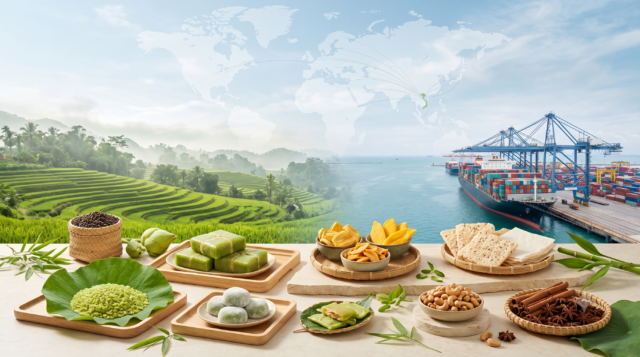
A product’s cultural appeal is only one part of export readiness. Businesses should evaluate several practical factors before placing an order or launching a new product.
Product consistency
Ingredients, appearance, flavor, texture, weight, and packaging should follow clear specifications. Consistency becomes especially important when products are supplied repeatedly to distributors and retailers.
Shelf life and storage
The product must remain suitable for its intended use throughout the planned distribution period. Shelf-life claims should be supported by appropriate product-specific evidence and storage conditions.
Packaging and labeling
Packaging should protect the product during transportation and storage while meeting the needs of its intended sales channel.
Labels may need to comply with destination-market requirements for ingredients, allergens, nutrition information, origin, date marking, importer details, and other mandatory information.
Food safety and documentation
Buyers should evaluate the manufacturer’s quality systems, relevant test results, traceability arrangements, and documentation. Certification and facility requirements vary according to the product and destination market.
Regulatory compliance
Importers should confirm applicable ingredient rules, food safety requirements, customs procedures, and any required permits or certificates before shipment.
Commercial feasibility
A product must also make commercial sense. Buyers should assess the total landed cost, minimum order quantity, manufacturing lead time, freight, duties, storage, and expected retail positioning.
9. OEM and Private Label Opportunities for Vietnamese Food Export
For brands that want to build their own product identity, OEM and private label manufacturing can provide alternatives to sourcing only existing retail products.
Depending on the manufacturer’s capabilities and the agreed project scope, development may include:
- Product concept and specification development.
- Ingredient and formulation discussions.
- Sample development and evaluation.
- Packaging format and design coordination.
- Manufacturing planning and quality requirements.
- Documentation support for the intended market.
Green rice products are one example of a category where traditional Vietnamese ingredients may inspire differentiated offerings, including Bánh Cốm, green rice snacks, and other product concepts, subject to technical feasibility.
Before starting an OEM project, buyers should define their target country, sales channel, expected order volume, packaging requirements, and applicable regulatory standards.
Choosing a manufacturing partner with clear communication and relevant technical capabilities can help businesses assess feasibility and establish realistic development expectations.
10. Exploring Vietnamese Food Export Opportunities with IMC
Vietnam’s traditional foods offer a broad foundation for product development, from familiar agricultural ingredients to distinctive regional specialties.
For businesses interested in green rice products and other food concepts, IMC can discuss potential OEM and private label projects based on the intended product, technical feasibility, and agreed manufacturing scope.
International buyers can begin by sharing their product concept, target market, preferred format, estimated order volume, and packaging requirements. This information helps establish a practical starting point for evaluating a potential collaboration.
As with any international food project, specific product availability, manufacturing capabilities, documentation, and export suitability should be confirmed directly before commercial commitments are made.
Conclusion: Building New Opportunities Through Vietnamese Food Export
Vietnamese Food Export offers opportunities to introduce the country’s distinctive culinary heritage to international consumers. Green rice products, traditional rice cakes, tropical fruit products, agricultural ingredients, coffee, tea, and selected botanical food products all provide potential directions for sourcing and product development.
The most suitable products are those that combine a compelling product story with consistent quality, appropriate shelf life, compliant packaging, reliable manufacturing, and a clear commercial strategy.
For importers, distributors, and food brands exploring Vietnamese green rice products or OEM opportunities, IMC welcomes discussions about potential product development and manufacturing collaboration.
Contact IMC
Công ty TNHH Tư vấn Y Dược Quốc tế (IMC)
- Website: www.imc.net.vn
- Email: info@imc.net.vn
- Hotline / WhatsApp: +84 911 818 018
Contact IMC to discuss your Vietnamese food product concept and explore potential OEM or private label opportunities.