


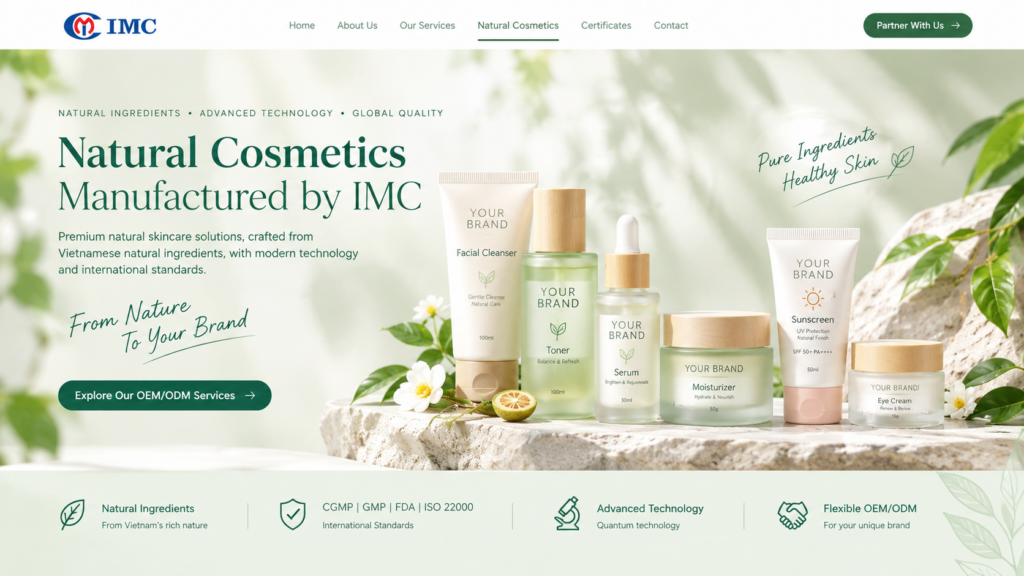
The global beauty industry is increasingly moving toward natural cosmetics, driven by consumer interest in plant-based ingredients, cleaner formulations, sustainable sourcing, and products that align with modern wellness lifestyles.
Vietnam is emerging as an attractive destination for natural cosmetics manufacturing thanks to its rich biodiversity, agricultural resources, growing production capabilities, and competitive manufacturing environment. For brands looking to develop natural skincare and personal care products, partnering with a reliable Natural Cosmetics Manufacturer can provide an efficient path from product concept to finished product.
With experience in natural cosmetics and OEM/ODM manufacturing, IMC supports brands in developing customized products based on their target market, formulation requirements, packaging concept, and business strategy.
What Is a Natural Cosmetics Manufacturer?
A Natural Cosmetics Manufacturer is a manufacturer specializing in the development and production of cosmetic products using natural, plant-based, or naturally derived ingredients.
Depending on the product concept, natural cosmetics may incorporate ingredients such as:
- Botanical extracts
- Natural oils and butters
- Herbal ingredients
- Plant-based active ingredients
- Natural fragrances
- Vitamins and antioxidants
- Marine or algae-derived ingredients
- Naturally derived moisturizing and cleansing agents
However, “natural cosmetics” does not simply mean putting plant ingredients into a formula. A professional manufacturing process also needs to consider formulation stability, safety, product performance, preservation, quality control, packaging compatibility, and regulatory requirements.
This is where an experienced manufacturing partner becomes important.
Why Choose a Natural Cosmetics Manufacturer in Vietnam?
Vietnam offers an interesting combination of local natural resources, traditional knowledge, modern manufacturing, and access to regional markets.
1. Rich Sources of Natural Ingredients
Vietnam has diverse agricultural and botanical resources that can be explored for cosmetic product development.
Examples include:
- Bưởi and citrus-derived ingredients
- Turmeric
- Betel leaf
- Green tea
- Rice-derived ingredients
- Aloe vera
- Various Vietnamese herbs
- Coconut-derived ingredients
- Botanical oils and extracts
- Marine and algae-based ingredients
These resources can provide opportunities to create products with a distinctive Vietnamese natural ingredient story.
2. Growing Cosmetics Manufacturing Capabilities
Vietnam’s cosmetics industry has been developing toward more professional formulation, manufacturing, packaging, and quality-control processes.
For brands, this creates opportunities to work with local manufacturers instead of importing all finished products from overseas.
3. Competitive OEM/ODM Development
Working with a Vietnamese Natural Cosmetics Manufacturer can allow brands to develop customized products while reducing the need to build their own manufacturing infrastructure.
4. Potential for Export-Oriented Products
Vietnamese natural ingredients can also become part of a broader brand story for international markets.
A product can combine:
Vietnamese natural ingredients + modern formulation + professional manufacturing + distinctive brand positioning
This creates an opportunity to turn local resources into products designed for global consumers.
OEM vs ODM for Natural Cosmetics
When working with a Natural Cosmetics Manufacturer, brands commonly choose between OEM and ODM models.
OEM Natural Cosmetics Manufacturing
Under the OEM model, the brand generally provides its own product concept or formulation requirements, while the manufacturer handles production according to agreed specifications.
OEM can be suitable for brands that already have:
- A proprietary formula
- An existing product specification
- A formulation developed by their R&D team
- Specific ingredient requirements
- A clearly defined product concept
The manufacturer can then support production, quality control, filling, packaging, and other agreed manufacturing processes.
ODM Natural Cosmetics Manufacturing
ODM provides greater support during product development.
An ODM partner can help brands with:
- Product concept development
- Formula development
- Ingredient selection
- Texture and sensory optimization
- Sample development
- Packaging recommendations
- Production
- Quality control
ODM can be particularly useful for startups and brands that have a market idea but do not have their own formulation or manufacturing team.
Natural Cosmetics OEM & ODM Product Categories
A professional Natural Cosmetics Manufacturer can potentially support multiple product categories.
Natural Skincare
Popular product concepts include:
- Facial cleanser
- Toner
- Serum
- Facial cream
- Moisturizer
- Face mask
- Sunscreen
- Eye care products
- Body lotion
- Hand cream
Natural Haircare
Natural haircare provides another opportunity for brands looking to build a complete personal-care portfolio.
Products may include:
- Herbal shampoo
- Conditioner
- Hair serum
- Scalp scrub
- Hair mask
- Anti-hair-loss care products
- Scalp care products
Natural Body Care
Brands can also develop:
- Body wash
- Body scrub
- Body lotion
- Hand wash
- Shower products
- Natural deodorizing products
Natural Oral Care
The natural beauty trend also extends into oral care, with product concepts such as:
- Natural toothpaste
- Herbal toothpaste
- Mouthwash
- Herbal oral-care products
This allows brands to develop a broader natural personal care portfolio under one brand identity.
How a Natural Cosmetics Manufacturer Develops a Product
Professional cosmetic manufacturing is not simply a production process. It starts much earlier with product strategy and R&D.
Step 1: Define the Product Concept
The brand and manufacturer first establish:
- Target consumer
- Product category
- Desired benefits
- Ingredient positioning
- Texture
- Fragrance
- Target price
- Packaging format
- Target market
For example, a brand may want to develop a natural facial serum featuring Vietnamese botanical ingredients for premium international consumers.
This concept then becomes the foundation for formulation development.
Step 2: Ingredient Selection
Ingredients should be selected based on their intended function, compatibility, quality, and regulatory suitability for the target market.
Natural ingredients can contribute to a strong marketing story, but their technical characteristics also need to be considered during formulation.
The manufacturer may evaluate:
- Ingredient origin
- Quality specifications
- Active components
- Compatibility
- Stability
- Sensory characteristics
- Supply availability
Step 3: Formula Development
R&D specialists develop and optimize the formula based on the product brief.
Important factors may include:
- Texture
- Absorption
- Appearance
- Fragrance
- Stability
- Preservation
- Packaging compatibility
- Consumer experience
The objective is to create a formula that is not only attractive on paper but also practical to manufacture at commercial scale.
Step 4: Sample Development
Samples allow the brand to evaluate the product before mass production.
Depending on the project, multiple rounds of adjustment may be required to achieve the desired:
texture → appearance → fragrance → performance → overall consumer experience
Step 5: Testing & Quality Control
Before commercial production, products need to undergo appropriate quality and safety evaluations based on the product type and target market.
Depending on the formulation and applicable requirements, this can involve areas such as:
- Physical and chemical testing
- Microbiological testing
- Stability evaluation
- Packaging compatibility
- Raw material quality control
- Finished product inspection
Step 6: Mass Production
Once the formula and specifications are approved, the product can move into commercial manufacturing.
Production controls help ensure consistency between batches.
Step 7: Filling, Packaging & Private Label
The final stage transforms the formula into a market-ready product.
Manufacturing support can include:
- Filling
- Labeling
- Bottling
- Tube packaging
- Jar packaging
- Pouch packaging
- Box packaging
- Private label packaging
Natural Ingredients: The Key to Product Differentiation
For modern beauty brands, natural ingredients can be more than a formulation component. They can become part of the brand story.
Vietnam provides opportunities to explore ingredients associated with local agriculture and traditional knowledge.
For example:
Turmeric
Turmeric has a long history of use in Vietnamese and Asian traditional practices and can be explored in skincare product concepts.
Pomelo
Pomelo-derived ingredients, including pomelo oil, can be incorporated into haircare and personal-care concepts.
Betel Leaf
Betel leaf is another Vietnamese botanical with traditional cultural associations that can inspire modern personal-care products.
Rice-Based Ingredients
Rice and rice-derived ingredients can support product concepts connected with Vietnamese agricultural heritage and Asian beauty traditions.
The key is to combine these ingredients with appropriate formulation science rather than relying only on their traditional reputation.
Natural Cosmetics and the “Vietnamese Ingredient” Advantage
One of the strongest opportunities for brands working with a Natural Cosmetics Manufacturer in Vietnam is the ability to build products around a distinctive origin story.
Instead of simply marketing a product as “natural,” brands can develop a more specific proposition:
Vietnamese natural ingredients + modern cosmetic science + professional manufacturing
This positioning can be particularly relevant for brands targeting consumers interested in:
- Clean beauty
- Botanical skincare
- Asian beauty
- Sustainable ingredients
- Cultural authenticity
- Natural personal care
For international brands, the story behind the ingredient can become an important part of product communication and brand differentiation.
Quality and Manufacturing Standards
Choosing a cosmetics manufacturer requires careful consideration of manufacturing conditions and quality systems.
Depending on the product, facility, and applicable market requirements, brands may look for manufacturing environments operating according to relevant standards such as GMP/cGMP and appropriate quality-management systems.
Brands should also discuss the regulatory requirements of their target market before production.
Important considerations include:
- Ingredient compliance
- Product safety
- Microbiological quality
- Manufacturing hygiene
- Batch consistency
- Documentation
- Product labeling
- Packaging requirements
- Export-market regulations
A strong manufacturing partner should be able to discuss these requirements during the product development process.
Private Label Natural Cosmetics for Your Brand
Private Label Natural Cosmetics provides a practical model for businesses that want to build their own beauty brand without establishing a complete manufacturing facility.
A private label project may include:
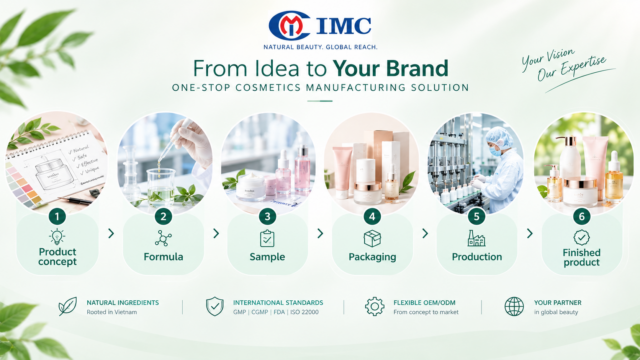
Product concept → Formula → Sample → Packaging → Production → Finished product
The brand can then focus its resources on:
- Branding
- Marketing
- Distribution
- E-commerce
- Retail partnerships
- Customer development
This model is suitable for both emerging brands and established companies looking to expand their product portfolio.
What to Look for in a Natural Cosmetics Manufacturer
Not every cosmetics factory is the right partner for every project.
Before choosing a Natural Cosmetics Manufacturer, brands should evaluate several factors.
R&D Capability
Can the manufacturer develop or customize formulas rather than simply producing an existing product?
Ingredient Expertise
Does the manufacturer understand botanical and naturally derived ingredients?
Manufacturing Standards
Are production processes and quality-control systems appropriate for the product and target market?
Product Customization
Can the manufacturer adjust texture, fragrance, ingredients, packaging, and other specifications?
Production & Packaging
Can the manufacturer support both manufacturing and final packaging?
Communication
A successful OEM/ODM project requires clear communication between the brand and manufacturer throughout development.
Export Support
For international projects, discuss applicable documentation, labeling, packaging, quality requirements, and other export considerations from the beginning.
Why Choose IMC as Your Natural Cosmetics Manufacturer in Vietnam?
IMC develops and manufactures natural cosmetics and personal-care products for brands looking for OEM and ODM solutions in Vietnam.
Our approach focuses on combining Vietnamese natural ingredients with modern product development and manufacturing capabilities.
Depending on the project, IMC can support:
- Natural cosmetics product development
- OEM cosmetics manufacturing
- ODM cosmetics development
- Formula customization
- Natural and botanical ingredient selection
- Product sampling
- Skincare manufacturing
- Haircare manufacturing
- Body care manufacturing
- Oral care manufacturing
- Packaging and private label development
- Quality control
- Export-oriented product development
IMC’s manufacturing ecosystem is designed to help brands move from an initial product idea toward a commercially ready product.
Build Your Natural Cosmetics Brand With a Vietnam OEM/ODM Partner
The opportunity for natural cosmetics is not only about using more plant-based ingredients. Successful products need to combine ingredient quality, formulation expertise, manufacturing consistency, attractive packaging, regulatory awareness, and a clear brand story.
Vietnam offers an interesting environment for developing these products, particularly for brands that want to incorporate Vietnamese natural ingredients into modern cosmetics.
By partnering with the right Natural Cosmetics Manufacturer, brands can turn a concept into a scalable product while maintaining greater flexibility throughout the development process.
Looking for a Natural Cosmetics Manufacturer in Vietnam?
IMC can support your project from R&D and formula development to OEM/ODM manufacturing, packaging, and private label production.
Contact IMC:
- Website: www.imc.net.vn
- Email: info@imc.net.vn
- Hotline / WhatsApp: +84 911 818 018